Slugging: The Overnight Skin Hack That Dermatologists Actually Approve
42 million TikTok views and counting — but does slugging actually work? We break down the science, the step-by-step method, who should do it, and who should absolutely skip it. No hype. Just answers.
June 7, 2026
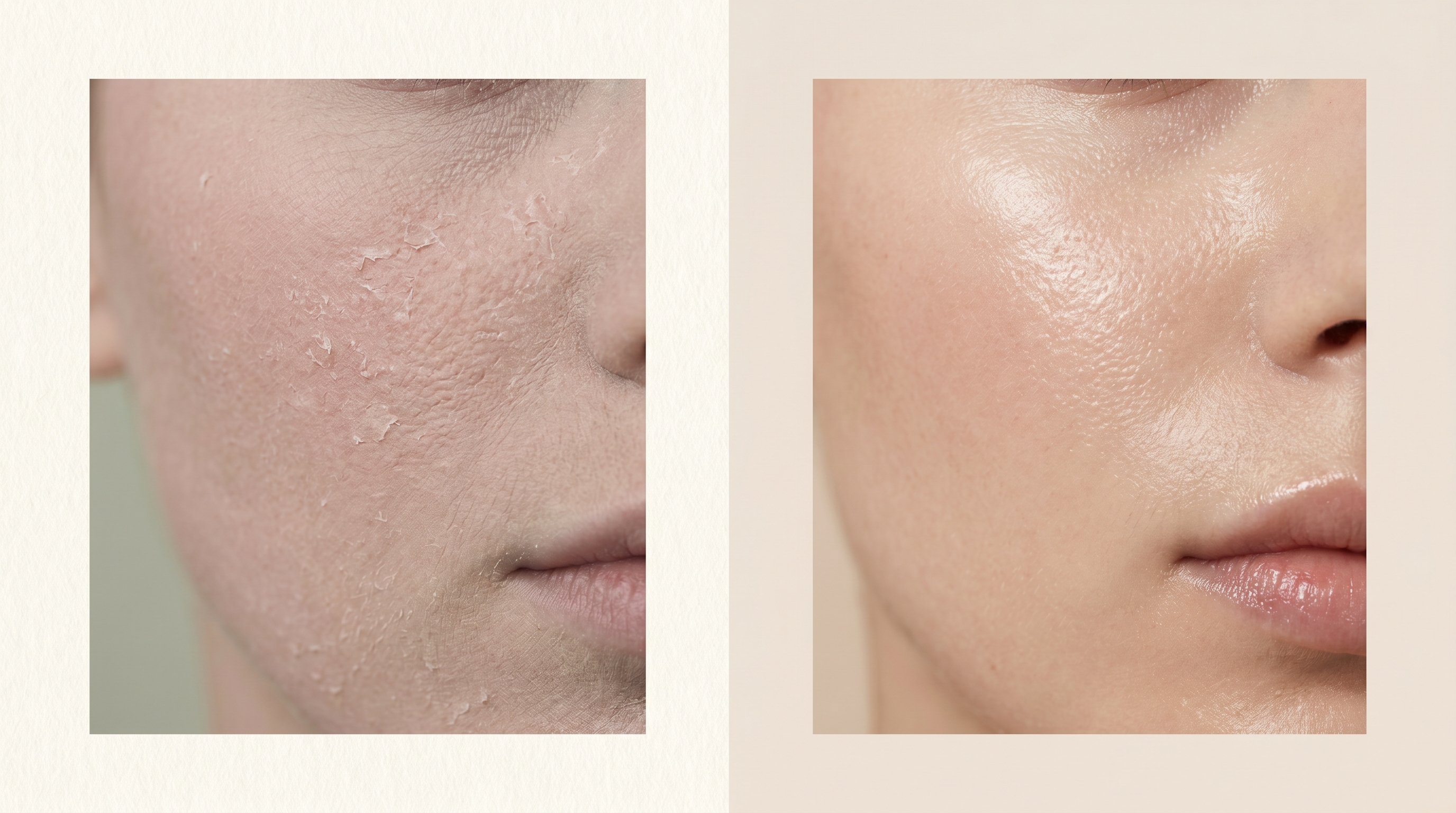
You have seen it on TikTok. Millions of people slathering their faces in petroleum jelly before bed, waking up with impossibly plump, dewy, glowing skin. It looks strange. It sounds counterintuitive. And if you have oily or combination skin, it probably made you close the app immediately.
But here is what those TikTok videos almost never tell you: slugging is not a trend. It is a clinically validated skin barrier technique that dermatologists have been recommending for decades — long before anyone put it in a video. The internet discovered something that medical professionals already knew.
The real question is not whether slugging works. It does. The question is whether it works for you — and whether you are doing it correctly.
This guide gives you the full picture: the science, the method, the products, and the honest truth about who should slug and who should not.
What Is Slugging, Exactly?
Slugging is the practice of applying a thin layer of an occlusive product — most commonly petroleum jelly — as the very final step of your nighttime skincare routine, over everything else you have applied.
The name has nothing to do with garden slugs. It refers to the shiny, almost luminous appearance your skin takes on after application — like the glistening trail of a slug. Appealing? Not particularly. Effective? Genuinely, yes.

The practice has roots that go back centuries. While TikTok made it famous, the technique has long been embedded in Korean beauty routines, and petrolatum-based products were used as a skin-healing tool by Native American communities as far back as the 15th century. Modern dermatology simply gave it a formal mechanism.
The Science: Why Does It Actually Work?
To understand slugging, you need to understand one concept: transepidermal water loss, or TEWL.
Your skin is constantly losing water through its surface — it evaporates from the deeper layers of your skin into the air around you. This is a normal process, but when TEWL is excessive — due to dry weather, compromised skin barrier, over-exfoliation, age, or heating systems — it leaves skin dehydrated, dull, tight, and vulnerable.
An occlusive product like petroleum jelly does not add moisture to your skin. What it does is create a physical seal on the skin's surface that dramatically slows down that water loss — keeping the hydration already in your skin exactly where it belongs while you sleep.
The result? By morning, your skin has been quietly repairing its barrier and retaining moisture for 6–8 hours uninterrupted — which is why sluggers consistently wake up with a visible glow and noticeably softer texture.
Research published in the Journal of Investigative Dermatology found that petroleum jelly can improve skin barrier function by up to 30% when used consistently. Dermatologists have recommended it for conditions like eczema, psoriasis, and severely dry skin for this exact reason — it is one of the most effective barrier-supporting ingredients in existence, and it is available at every pharmacy for under £3.
Who Should Slug (And Who Should Not)
This is the part most TikTok videos skip entirely. Slugging is not for every skin type — and applying it incorrectly or to the wrong skin type can actively worsen your skin. Read this section carefully before you start.
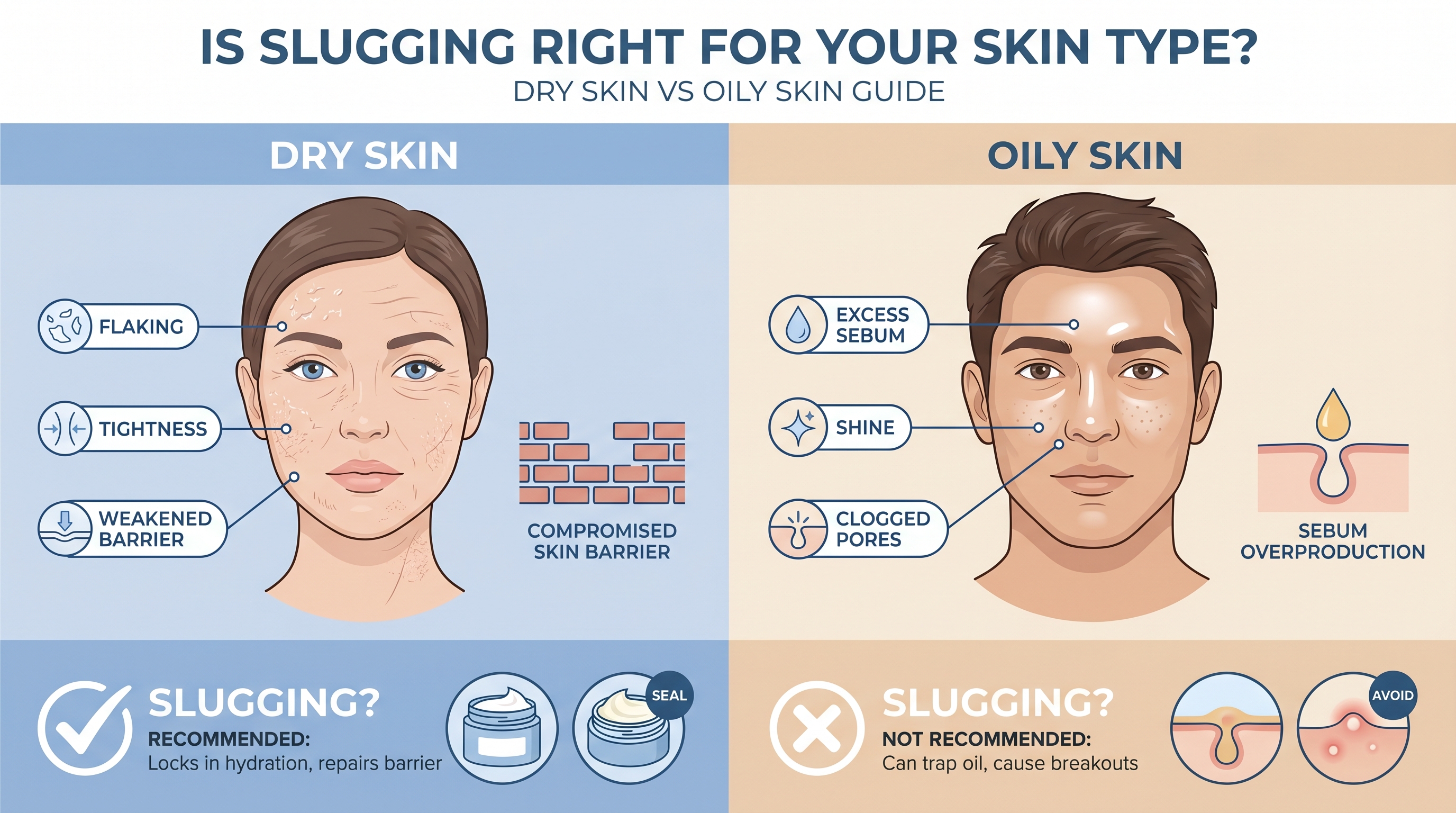
✅ You Should Slug If You Have:
Dry or very dry skin — This is slugging's primary use case. If your skin feels tight after cleansing, flakes in cold weather, or drinks up moisturiser within minutes, slugging will be transformative.
Dehydrated or dull skin — Even oilier skin types can experience dehydration (lack of water, not oil). If your skin looks flat and tired despite being well-moisturised, slugging 1–2 nights a week can dramatically restore radiance.
Compromised or sensitised skin — If you have been over-exfoliating, experiencing redness, or your barrier is disrupted from actives like retinol or acids, slugging accelerates barrier repair significantly.
Mature or ageing skin — Skin naturally produces less oil and loses moisture more quickly with age. Slugging is particularly effective for women in their 30s and beyond who notice increased dryness.
Normal skin — If you have no particular skin concerns, slugging once or twice a week is a low-effort way to maintain a healthy, glowing barrier.
❌ You Should Proceed With Caution (Or Skip) If You Have:
Acne-prone or breakout-prone skin — This is the most important warning on this page. While petroleum jelly is technically non-comedogenic (meaning it does not block pores on its own), it creates an occlusive seal that can trap sebum, dead skin cells, and acne-causing bacteria beneath the surface. For acne-prone skin, this can trigger or worsen breakouts. The consensus among dermatologists is clear: if you are prone to acne, slugging with straight petroleum jelly is not recommended.
Oily or combination skin — Similar reasoning applies. The occlusive layer on already-oily skin can create a congested, suffocated feeling and increase the risk of pore-clogging. If you have oily skin but still want to try slugging, see the alternatives section below.
Fungal acne (Malassezia) — Avoid entirely. Occlusive, fatty environments are ideal conditions for yeast to thrive. Slugging can actively worsen fungal acne.
Rosacea — Start with extreme caution and patch test first. The prolonged contact of petroleum jelly may trigger flushing or sensitivity in some rosacea-prone individuals.
Step-By-Step: How To Slug Correctly
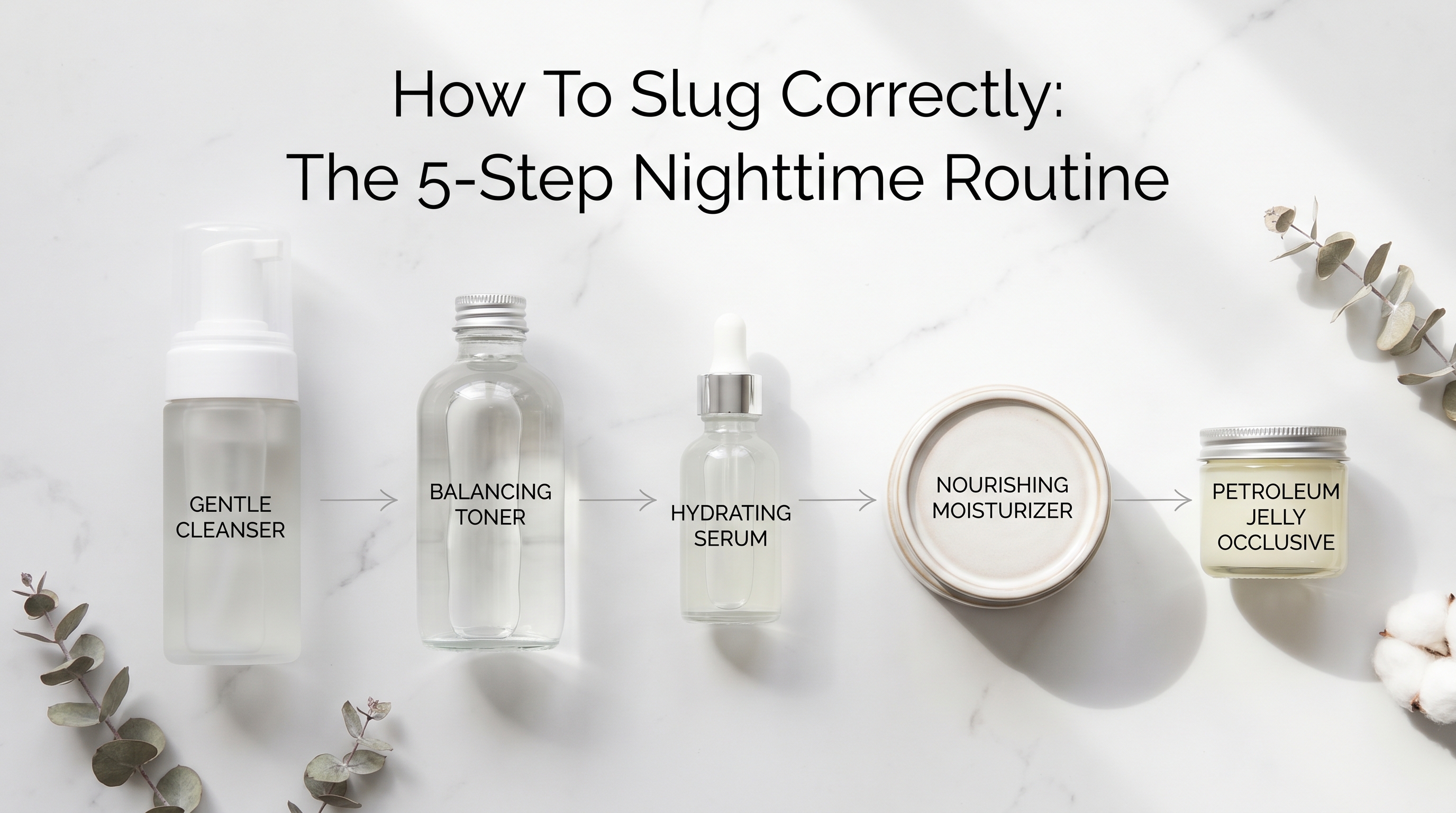
Most people who try slugging and have a bad experience are making one of two mistakes: they are applying it to a face that has not been properly cleansed, or they are applying it over active ingredients that should not be occluded. Here is the correct method.
Step 1 — Double Cleanse
Start with a thorough cleanse. This step is non-negotiable for slugging. The occlusive layer is going to seal everything on your skin's surface for the next 8 hours — you want that surface to be completely clean.
Use an oil-based cleanser first to dissolve SPF, makeup, and the day's pollution. Follow with your regular water-based cleanser for a complete clean. If you only single-cleanse before slugging, you risk sealing dirt and bacteria under the petrolatum layer.
Product to use: ELEMIS Pro
Step 2 — Apply Your Hydrating Toner (Optional)
If you use a hydrating toner or essence, apply it now while skin is slightly damp. This adds a layer of water-based hydration that the occlusive will then lock in — maximising the moisturising effect.
Product to use: Peptide Face Toner | Essence Extract Hydrating Toner for Face
Step 3 — Apply Your Serum
On slugging nights, keep your serum simple. A hydrating serum — hyaluronic acid, peptides, niacinamide — works perfectly.
Crucially: do not apply retinol, exfoliating acids (AHAs/BHAs), or high-strength vitamin C on slugging nights. When potent actives are trapped under an occlusive layer, their penetration and intensity is amplified significantly. Applied this way, they can cause unexpected irritation, peeling, and sensitivity even in skin that normally tolerates them well.
Reserve your retinol and acids for the nights you are not slugging.
Product to use: Dr. Dennis Gross Advanced Retinol + Ferulic Texture Renewal Serum
Step 4 — Moisturise
Apply your regular moisturiser as normal. The petroleum jelly goes on top of this, not instead of it. The moisturiser does the active hydrating work; the occlusive layer seals it all in.
Product to use: ELEMIS Pro-Collagen Marine Cream SPF 30
Step 5 — Apply the Occlusive
Take a very small amount of petroleum jelly — about the size of a pea, perhaps two — and warm it between your fingertips. Then press and smooth it gently over your entire face (or only the dry areas, if you have combination skin) in a thin, even layer. You do not need a thick coating. A thin, barely-there film is all that is required to create the seal.
Product to use: Vaseline Original Healing Jelly or Aquaphor Healing Ointment
Step 6 — Sleep On a Clean Pillowcase
This is a practical note worth making: petroleum jelly will transfer to your pillow. Use a pillowcase you do not mind getting products on, or switch to a satin or silk pillowcase — which has the added benefit of reducing friction on your skin overnight.
Step 7 — Morning Cleanse
In the morning, use a gentle cleanser to remove the residual petroleum jelly before starting your day routine. Do not skip this step — applying SPF and makeup over occlusive residue is not ideal for skin clarity.
How Often Should You Slug?
For dry or very dry skin: 3–4 nights per week is appropriate. Some committed sluggers do it every night in winter.
For normal skin: 1–2 nights per week is sufficient for maintenance and glow.
For combination skin (dry-area slugging only): Spot-slug on dry patches — cheeks, jawline, lip area — 1–2 nights per week.
For acne-prone skin: See alternatives below, or skip entirely.
The Best Products for Slugging
You do not need anything expensive or complicated. The most effective occlusives for slugging are also the most accessible.

Classic Choice: Vaseline Original Petroleum Jelly
The original and still the best for most people. Fragrance-free, inexpensive, and has been clinically studied more than any other occlusive. One tub lasts months. Vaseline Original Healing Jelly
Upgraded Choice: Aquaphor Healing Ointment
Slightly lighter than pure petroleum jelly, with the addition of panthenol (vitamin B5) and glycerin — both of which actively hydrate the skin rather than just sealing it. A step up from Vaseline for those who find pure petrolatum too heavy. Aquaphor Healing Ointment
Premium Choice: Laneige Lip & Sleeping Mask (for targeted slugging)
If you want the benefits of overnight occlusivity with a more sensory, skincare-forward experience, Laneige's sleeping mask range uses a combination of occlusives and actives. Not pure slugging, but a sophisticated variation — and it smells beautiful. Laneige Sleeping Mask
For Acne-Prone Skin: Squalane Oil (Alternative Approach)
If traditional petroleum jelly is not suitable for your skin type but you still want occlusive support, squalane oil is a lightweight, non-comedogenic alternative that mimics the skin's natural sebum and provides gentle barrier support without the risk of congestion. Apply a few drops as your final step. The Ordinary Squalane
What to Expect: A Realistic Timeline
Night 1–3: You will notice your skin feels significantly softer and more hydrated by morning. The glow is immediate and very real.
Week 1–2: Barrier function begins to improve. Redness, tightness, and sensitivity from over-exfoliation or active use start to calm down. Skin texture smooths noticeably.
Month 1+: With consistent use, long-term hydration improves, fine lines appear softer (due to improved hydration, not collagen production — be clear on this distinction), and overall skin resilience increases.
Realistic expectation: Slugging is a hydration and barrier tool. It will give you visibly plumper, more luminous skin. It will not fade dark spots, stimulate collagen, or replace your actives. Think of it as the foundation that makes everything else in your routine work better.
Slugging vs. The Moisturiser You Already Use — Is There a Difference?
Yes — and it matters. A regular moisturiser, however rich, is designed to hydrate the skin and partially evaporate. It delivers ingredients, then steps back. An occlusive like petroleum jelly creates a physical barrier that stays in place, with virtually zero evaporation.
The analogy that makes most sense: a moisturiser is like watering a plant. Slugging is like watering it and then covering the soil with a layer of protective mulch so the moisture stays in. Both matter. Combined, they are considerably more effective than either alone.
The Blossom Verdict
Slugging is one of the few viral beauty trends that has held up completely under scientific scrutiny. The mechanism is sound, the results are real, and the cost is negligible. If you have dry, dehydrated, or sensitised skin and you have not tried it, you are genuinely missing one of the most effective overnight rituals available.
The caveats are real too — acne-prone and oily skin types should approach carefully or skip entirely, and the no-actives rule on slugging nights is non-negotiable. But applied correctly, to the right skin type, slugging is not a hack. It is just good skincare with a memorable name.
Start with two nights a week. Use a clean pillowcase. Give it four weeks.
Your skin will tell you everything you need to know.
Quick Reference: Slugging Cheat Sheet
| Best for | Dry, dehydrated, normal, mature skin |
| Avoid if | Acne-prone, oily, fungal acne, rosacea |
| When to do it | Evenings only, as final skincare step |
| How often | 1–4 nights per week depending on skin type |
| What to use | Vaseline, Aquaphor, or squalane (acne-prone alt.) |
| What not to layer under | Retinol, AHAs, BHAs, high-strength vitamin C |
| Morning after | Gentle cleanser to remove residue, then normal routine |
| Expected results | Softer skin from night 1; barrier repair within 2 weeks |